How can proper attic insulation prevent ice dams in Lincoln Park?
Attic insulation rated at R-38 or higher prevents ice dams by keeping heat inside your home instead of warming the roof deck. When your roof stays cold, snow won't melt and refreeze at the eaves, eliminating the melt-and-freeze cycle that creates damaging ice dams. This insulation level meets the Department of Energy's recommendation for Michigan's climate zone and can reduce heating costs by 15-20%.
The real problem starts when warm air escapes into your attic space. That heat warms the roof deck, melting snow from underneath. The water runs down to your cold eaves and refreezes, building up into ice dams that force water under your shingles.
Check for air leaks around ductwork, electrical penetrations, attic hatches, and recessed lights. These gaps undermine even the best insulation. We've seen attics with R-50 insulation that still had ice dam problems because of unsealed bypasses letting warm air through.
At Lincoln Park Roofing, we inspect the entire attic system—not just insulation depth but air sealing too. Most homes we inspect in Lincoln Park have R-19 to R-30, well below the recommended R-38 to R-49 for our climate.
Adding insulation pays for itself. Beyond preventing ice dams, homeowners typically see their winter heating bills drop by $200-300 per season. For help assessing your attic, reach out to a roofer in Lincoln Park who understands Michigan winters.
Why is it important to clear gutters and downspouts for ice dam prevention?
Clean gutters allow meltwater to drain off your roof instead of backing up and refreezing into ice dams. When gutters fill with leaves and debris, water pools behind the blockage, freezes solid, and expands back under your shingles. This trapped water causes leaks, damaged fascia boards, and interior ceiling stains that cost thousands to repair.
Lincoln Park sees heavy leaf fall from October through November, right before our first hard freeze. That timing means gutters often clog just when you need them most.
Water needs somewhere to go. When it can't flow through your gutters, it backs up under shingles, seeps into fascia boards, or overflows and freezes into massive icicles that pull gutters off your house. We've responded to calls where gutters separated completely from the roofline under the weight.
Clean your gutters in late October and again in early December after all leaves have fallen. Pay special attention to downspout outlets—these clog first and back everything up. Installing mesh gutter guards cuts maintenance time but doesn't eliminate it entirely. You'll still need to check them before winter.
According to the National Roofing Contractors Association, proper gutter maintenance ranks among the top three preventable causes of winter roof damage. If you're not comfortable on a ladder or your roof is steep, Lincoln Park Roofing handles gutter cleaning as part of our winter preparation service.
How does roof ventilation help prevent ice dams in winter?
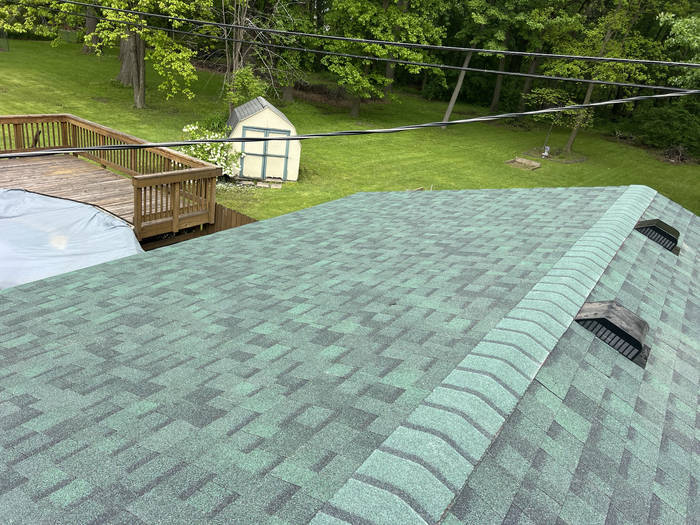
Balanced roof ventilation stops ice dams by exhausting warm attic air before it heats your roof deck. A properly vented attic pulls cool outside air through soffit vents and exhausts warm air through ridge or roof vents, keeping your entire roof at outdoor temperature. This prevents the uneven heating that melts snow mid-roof while leaving cold eaves where water refreezes into ice dams.
Your attic needs both intake vents (usually in soffits) and exhaust vents (at the ridge or high on the roof) working together. Intake alone or exhaust alone doesn't work—you need balanced airflow from eaves to peak.
The ratio matters too. You need 1 square foot of net free ventilation area for every 150 square feet of attic space, split evenly between intake and exhaust. Most homes we inspect have exhaust vents but blocked or insufficient soffit vents, creating negative pressure that pulls conditioned air from your living space.
Ridge vents combined with continuous soffit vents provide the best airflow. Box vents, turbines, and powered attic fans work but require careful placement to avoid short-circuiting the system. We've seen homes where improperly placed vents actually reduced airflow by letting exhaust air flow right back in through nearby intake vents.
The U.S. Department of Energy confirms that proper attic ventilation reduces both ice dam formation and cooling costs in summer. At Lincoln Park Roofing, we assess your ventilation during roof inspections and recommend improvements based on your specific roof design. Contact our Downriver roofing experts for a ventilation assessment.
What role does snow removal play in preventing ice dams?
Removing snow from your roof eliminates the source material for ice dams before the melt-and-freeze cycle begins. When you clear snow within 24 hours of storms that drop 6 inches or more, you prevent the heavy snow load that melts from attic heat, runs to cold eaves, and refreezes into destructive ice dams. A roof rake lets you safely remove snow from the ground.
Every inch of snow on your roof represents potential meltwater. Heavy, wet snow weighs about 20 pounds per cubic foot. On a 1,500-square-foot roof, 12 inches of snow weighs roughly 15 tons—and all that snow can turn into gallons of water looking for a way off your roof.
Focus on the bottom 3-4 feet of your roofline where ice dams form. You don't need to clear the entire roof, just create a gap at the eaves so meltwater can drain directly off without hitting ice. Pull snow straight down rather than scraping across shingles, which damages the granules.
Aluminum roof rakes with wheels or plastic edges work best. Avoid metal tools that scrape directly on shingles. Work from the ground—never climb onto a snow-covered roof. If your roof is steep, has multiple levels, or you're uncomfortable with the height, hire professionals.
According to lincolnparkroofing.com, timing matters more than perfection. Removing 70% of the snow quickly beats removing 100% three days later after freeze-thaw cycles have already started. For homes prone to ice dams, we recommend removal after each 6-inch snowfall through winter.
What types of roofing materials are best for preventing ice dams?
Metal roofing prevents ice dams most effectively because its smooth, slick surface sheds snow before it accumulates enough to create melt-freeze cycles. The continuous panels eliminate the horizontal ledges where ice builds up, and dark metal absorbs solar heat that accelerates snow sliding. Standing seam metal roofs with 4:12 or steeper pitch clear themselves naturally within days of most snowfalls.
Traditional asphalt shingles work fine when combined with proper ice and water shield protection. Install a minimum 3-foot-wide ice and water shield membrane along all eaves, valleys, and roof penetrations. This self-sealing membrane prevents water penetration even when ice dams force water under shingles.
Architectural shingles perform better than three-tab shingles in ice dam conditions. Their thicker profile and improved sealant strips resist wind-driven rain and backing water. Choose shingles rated for cold weather application—cheaper shingles use sealants that don't activate properly in temperatures below 40°F.
We're seeing more Lincoln Park homeowners choose metal roofing specifically for ice dam prevention. While the upfront cost runs 2-3 times higher than asphalt, metal roofs last 50+ years versus 20-25 for shingles, and they eliminate ice dam damage completely on properly ventilated homes.
Color matters less than you'd think. Dark roofs absorb more solar heat, but the difference only matters on sunny days above 30°F—exactly when you don't have ice dam conditions anyway. Focus on roof pitch, ventilation, and insulation first. For material recommendations specific to your home, contact Lincoln Park roof repair specialists who know local building codes.
How can installing heat cables help prevent ice dams?
Heat cables installed in a zigzag pattern along roof eaves melt channels through snow and ice, allowing trapped water to drain before it backs under shingles. These self-regulating electric cables activate automatically when temperatures drop below 38°F and create 2-3-inch-wide drainage paths through ice dams. Properly installed heat cables prevent water backup while using only 5-8 watts per foot during operation.
Heat cables work as a supplement to proper insulation and ventilation, not a replacement. They address ice dams on homes where architectural features—like vaulted ceilings or complex rooflines—make perfect attic temperature control impossible.
Install cables in a serpentine pattern extending 12-18 inches up from the roof edge and down into gutters and downspouts. The cables need to create a continuous path for water from roof to ground. Loop spacing should be 15 inches on-center for Michigan snow loads. Secure cables with plastic clips designed for your roof material—never use metal fasteners that damage shingles.
Self-regulating cables cost more upfront but use 30-40% less electricity than constant-wattage cables. They automatically adjust heat output based on temperature and moisture, running only when needed. A typical Lincoln Park home needs 80-120 feet of cable, drawing 600-800 watts during active melting cycles.
At Lincoln Park Roofing, we install heat cables as part of comprehensive ice dam solutions on homes with persistent problems. They're particularly effective on north-facing roof sections that never get direct sun. We combine them with improved insulation and ventilation for permanent solutions rather than bandaids. Our team can assess whether your home would benefit from this approach during a pre-winter inspection.
When should you schedule a professional roof inspection for ice dam prevention?
Schedule your professional roof inspection in September or early October, at least 6 weeks before Lincoln Park's first freeze. This timing gives you time to complete recommended insulation upgrades, ventilation improvements, and repairs before winter weather arrives in mid-November. Pre-winter inspections identify vulnerable areas—inadequate attic insulation, blocked soffit vents, damaged flashing—that contribute to ice dam formation when temperatures drop.
The inspection should cover five critical areas: attic insulation depth and air sealing, ventilation intake and exhaust balance, roof and flashing condition, gutter function, and interior signs of previous ice dam damage like ceiling stains or wall discoloration.
Professional roofers catch problems homeowners miss. We check insulation depth in multiple attic locations because builders often skimp in difficult areas. We measure actual ventilation area versus code requirements. We inspect the roof from above for damaged or missing shingles that leak when ice dams form.
Most importantly, we look for the telltale signs of previous ice dam damage—staining on roof decking, water marks on rafters, and rust on nail heads. These signs show where your specific home is vulnerable. Every house develops ice dams in predictable locations based on its heating system, insulation gaps, and roof geometry.
According to Lincoln Park Roofing, homes with previous ice dam damage have an 85% chance of repeat problems without corrective action. One inspection in September prevents emergency calls in January when repairs cost triple and availability is limited. We provide written assessments with prioritized recommendations—critical fixes first, nice-to-have improvements second. Call a licensed roofer near me before the fall rush begins.
What are the signs that your home might be prone to ice dams?
Homes prone to ice dams show icicles larger than 6 inches hanging from gutters, uneven snow melting patterns on the roof, ice buildup at eaves while upper roof sections are bare, and water stains on exterior walls or interior ceilings near exterior walls. These warning signs indicate heat escaping through your roof deck, creating the temperature differential that causes snow to melt mid-roof and refreeze at cold eaves.
Watch your roof after the first 6-inch snowfall. If snow melts quickly on certain sections while other areas stay white, you've got heat loss. The bare spots mark where attic insulation fails or air leaks let warm air escape.
Interior warning signs matter too. Ice buildup inside attic spaces near eaves signals serious problems. Frost on attic sheathing or rafters means moisture-laden warm air is escaping into your attic. When that frost melts during warmer days, it drips onto insulation and reduces its effectiveness.
Check your neighbors' roofs too. If your roof melts bare while nearby homes stay snow-covered, your house is losing heat. Michigan winters give you multiple chances to observe these patterns—don't ignore them.
Energy bills tell the story too. If you're spending $300+ monthly heating a 1,500-square-foot home, you're likely bleeding heat through your attic. That same heat creates ice dams. At Lincoln Park Roofing, we correlate heating costs with ice dam frequency—they almost always track together.
Previous ice dam damage means future ice dams unless you fix the root cause. One season with ceiling stains or damaged soffit means you'll see worse next winter. For homes showing these signs, schedule an assessment with roofer Allen Park MI professionals before the next heating season.
Pro Tip: Pro Tip from Lincoln Park Roofing: Walk around your home after the first hard freeze when temperatures drop into the teens. Look for uneven frost patterns on your roof—bare spots while neighbors' roofs stay frosted white mean you're losing heat. Catching this early in the season gives you time to add insulation before ice dams form.