What are the benefits of asphalt shingles for Michigan winters?
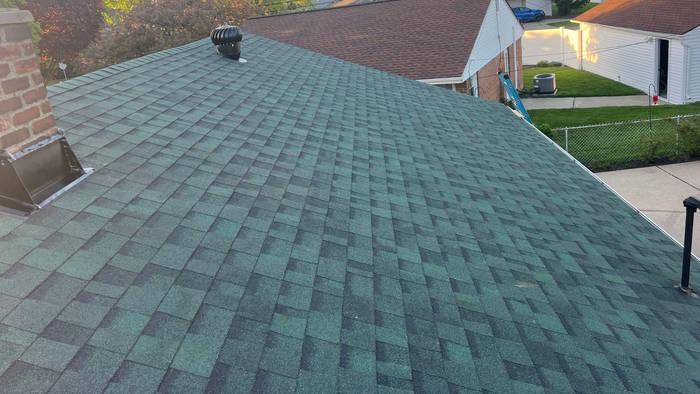
Asphalt shingles handle Michigan's freeze-thaw cycles better than most materials while costing $90-$100 per square installed. They're engineered to flex with temperature swings from -10°F to 90°F without cracking, and quality architectural shingles carry wind ratings up to 130 mph—essential for our January nor'easters.
We install more asphalt roofs than any other material in Lincoln Park, and there's a reason why. They work. Modern fiberglass-based shingles outlast the old organic paper-backed versions by 10-15 years, and they don't absorb moisture the way older shingles did.
The two main types—three-tab and architectural—both perform well here. Three-tab shingles cost less upfront but last 15-20 years. Architectural shingles run about 20% more but give you 25-30 years of protection with better wind resistance. I'll be straight with you: spend the extra money on architectural if your budget allows it.
Color matters more than you'd think. Dark shingles absorb heat and help melt snow faster, which prevents ice dams. Light colors reflect summer heat and cut cooling costs. In Michigan, we usually recommend medium tones that split the difference.
At Lincoln Park Roofing, we've installed thousands of asphalt roofs across Downriver. The key is proper underlayment—we use ice and water shield along the eaves and valleys, not just the minimum code requires. For roofing services throughout the area, our roofer in Lincoln Park team covers every detail.
How does metal roofing perform in Michigan winters?
Metal roofing eliminates 70% of ice dam problems because snow slides off before it can melt and refreeze at the eaves. Standing seam metal roofs last 50-70 years in Michigan—two to three times longer than asphalt—and their interlocking panels seal against wind-driven snow better than any shingled system.
The upfront cost runs $300-$700 per square, which makes homeowners hesitate. But do the math: a metal roof lasting 60 years costs less per year than replacing asphalt shingles twice. Plus, metal roofs cut heating bills by 15-25% because they reflect heat back into your attic instead of absorbing it.
Steel is the workhorse material for residential metal roofing. It's strong, affordable, and holds paint finishes for 30+ years. Aluminum costs more but never rusts—smart if you're near the Detroit River or downriver industrial areas. Copper looks stunning and lasts forever, but at $1,200+ per square, it's typically reserved for historic homes or high-end projects.
The snow-shedding capability is real. I've seen 8 inches of heavy, wet snow slide off a metal roof in sheets while neighboring asphalt roofs hold every flake. That's less weight on your structure and fewer ice dam headaches. According to the U.S. Department of Energy, metal roofing also qualifies for energy efficiency tax credits in many cases.
One warning: metal roofs are loud in hail without proper insulation underneath. We install sound-dampening underlayment that cuts noise by 60%. It adds $40-$50 per square but makes the difference between hearing rain and hearing a drum solo.
At Lincoln Park Roofing, we're seeing more homeowners switch to metal every year. Our Downriver roofing experts can walk you through samples and help you pick the right gauge and finish for Michigan weather.
What makes slate roofing suitable for winter weather in Michigan?
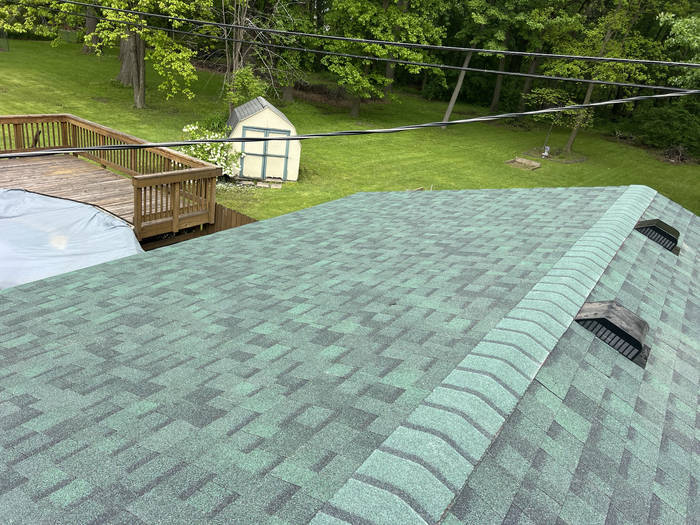
Slate roofs withstand 150+ years of Michigan winters because natural stone doesn't absorb water, crack from freeze-thaw cycles, or deteriorate from temperature extremes. Each slate tile is dense, non-porous rock that sheds snow and ice while maintaining structural integrity through decades of 100°F annual temperature swings.
I'll level with you: slate is expensive. At $600-$1,500 per square installed, it costs 6-15 times more than asphalt. But slate roofs on homes built in the 1920s are still protecting those houses today—the same roof, original installation. That's three or four asphalt roof replacements you'll never pay for.
The weight is serious business. Slate runs 800-1,500 pounds per square (100 square feet), compared to 200-300 pounds for asphalt. Your home's structure must be engineered to carry that load. We inspect the framing and sometimes need to add support before installation. Most homes built after 1950 weren't designed for slate, though it can be retrofitted.
Slate performs beautifully in winter. Snow and ice slide off its smooth surface, and the stone itself is completely impermeable to water. Ice dams still form at the eaves if your attic ventilation is poor, but the slate itself won't leak—water just runs over it until it finds the gutter.
Color options are limited to what nature provides: gray, black, green, purple, and red, depending on the quarry. Each roof has subtle color variations that give it character. Repairs require a specialist because you can't just nail down a replacement tile—slate splits if you're not careful.
According to Lincoln Park Roofing, slate makes sense for historic homes, properties you plan to keep for decades, or premium construction where longevity justifies the investment. For comprehensive roofing services, contact lincolnparkroofing.com for a structural assessment.
How important is professional installation for winter roofing materials?
Professional installation determines whether your roof lasts 30 years or fails in 5—poor workmanship causes 80% of premature roof failures in Michigan. Proper installation includes ice and water shield placement, ventilation balancing, flashing details, and nail patterns that DIY installers and inexperienced crews consistently miss.
I've torn off hundreds of roofs that failed early, and it's almost never the material's fault. It's nails placed wrong, valleys improperly sealed, or ventilation ignored. A $15,000 roof installed poorly performs worse than a $7,000 roof installed correctly.
Winter installation requires experience. Asphalt shingles need temperatures above 40°F to seal properly. We monitor weather forecasts and use specialized cold-weather adhesives when necessary. Metal roofing installs in any temperature, but ice on the deck creates safety hazards that require proper equipment and training.
The ice and water shield is your first defense against ice dams. Code requires it 3 feet up from the eaves. We install it 6 feet minimum—sometimes all the way up to the ridge on shallow-slope roofs. That extra protection costs $150-$300 but stops thousands in water damage.
Ventilation is where most roofers cut corners. Your attic needs balanced intake (soffit vents) and exhaust (ridge vents) to maintain consistent temperature. Without it, heat escapes through the roof, melts snow, and creates ice dams. We calculate the required ventilation area based on your attic square footage—not guesswork.
At Lincoln Park Roofing, our crew has installed roofs across Downriver for over 20 years. We're not subcontractors learning on your home—we're the same guys who answer the phone and show up for repairs. We also help with roof insurance claim Lincoln Park MI paperwork when storm damage strikes.
What roofing materials best prevent ice dams in Michigan?
Metal roofing prevents ice dams most effectively because its smooth surface sheds snow before melting occurs, and standing seam panels create a continuous barrier without horizontal seams where ice can form. However, proper attic insulation (R-49 minimum) and ventilation (1 square foot per 150 square feet of attic) matter more than material choice.
Ice dams form when heat escapes your attic, warms the roof deck, melts snow, and that water refreezes at the cold eaves. The ice builds up, traps more water, and eventually forces it under shingles. I've seen ice dams cause $20,000 in ceiling and wall damage.
The material helps, but it's not the main factor. Metal roofing's snow-shedding ability gives you an advantage—no snow means no melt, no refreeze, no dam. Asphalt shingles hold snow but perform fine if your attic temperature stays below 30°F.
The real solution is keeping your attic cold. That means:
- R-49 to R-60 insulation on the attic floor (not the rafters)
- Sealed air leaks around chimneys, plumbing stacks, and recessed lights
- Balanced soffit and ridge ventilation
- Exhaust fans vented outside, not into the attic
We also install heat cable along the eaves for problem areas. It's a 120V heating element that melts channels through ice dams, allowing trapped water to drain. It's not a fix—it's a Band-Aid for poor ventilation—but it works when you need emergency protection.
According to the National Roofing Contractors Association, proper installation and attic climate control eliminate 90% of ice dam issues regardless of roofing material.
I've worked on homes where neighbors with identical roofs have different ice dam problems. The difference is always attic insulation and ventilation. Fix that first, then choose your roofing material. Our team at roofer Taylor MI inspects attics during every estimate to identify these issues.
Why choose rubber roofing for flat or low-slope roofs in winter?
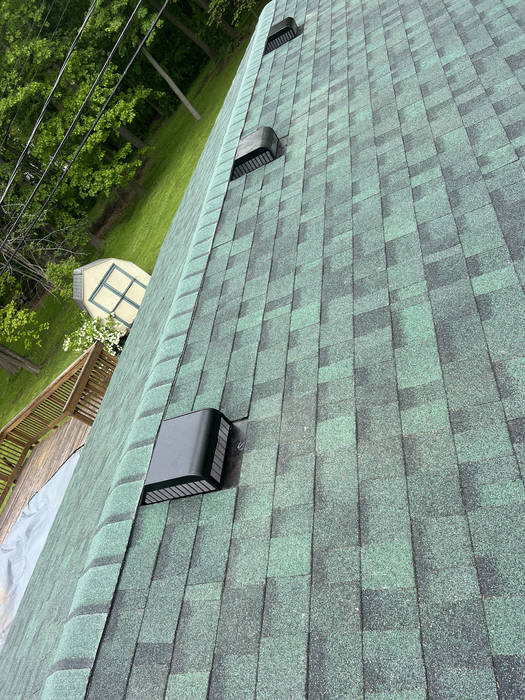
Rubber roofing (EPDM) stays flexible down to -40°F and creates a seamless waterproof membrane perfect for Michigan's flat and low-slope roofs. It expands and contracts through temperature swings without cracking, lasts 25-30 years, and costs 30-40% less than modified bitumen while outperforming it in cold weather.
Most homes in Lincoln Park have pitched roofs, but garages, additions, and back porches often feature flat or low-slope sections. That's where rubber roofing shines. EPDM (ethylene propylene diene monomer) rubber is the material we install most—it's proven, affordable, and handles winter perfectly.
The installation creates a single continuous sheet with heat-welded or tape-sealed seams. No overlapping shingles means no water infiltration points. Snow and ice sit on top without finding gaps. The material itself is completely waterproof—not water-resistant, waterproof.
Rubber roofing costs $4-$8 per square foot installed, depending on thickness. We use 60-mil EPDM for residential applications—thick enough to resist punctures and damage but flexible enough to handle building movement. It comes in black or white; white reflects heat and keeps second-floor rooms cooler in summer.
One downside: rubber roofing isn't pretty. It's functional, not decorative. You're not putting it on your front-facing roof. But for low-slope sections where performance matters more than looks, rubber delivers.
TPO (thermoplastic polyolefin) is the newer alternative. It's white, heat-welded at seams, and slightly more durable than EPDM. It costs 15-20% more but reflects heat better. Both materials work well in Michigan winters.
At Lincoln Park Roofing, we install both EPDM and TPO based on your budget and needs. Our Lincoln Park roof repair crew handles flat roof emergencies year-round, including winter leaks that can't wait until spring.
What should property managers consider for winter roofing on rental properties?
Property managers should prioritize asphalt shingles or metal roofing for rental properties because both deliver 20+ years of low-maintenance performance at predictable costs. Asphalt costs $90-$100 per square and handles tenant neglect better than premium materials, while metal roofing's $300-$500 per square investment eliminates re-roofing for 50+ years.
I work with property managers across Downriver who own 5-50 rental units. Their priorities differ from homeowners—they need reliable, affordable protection that doesn't require tenant cooperation or frequent maintenance.
Asphalt shingles make the most sense for most rental properties. They're cost-effective, perform well through Michigan winters, and every roofer knows how to repair them. When you own multiple properties, standardizing on one material simplifies maintenance and keeps costs predictable.
Metal roofing is the better long-term investment if you're keeping the property for decades. The higher upfront cost gets spread across 50+ years of ownership. You'll never re-roof that building again, and tenants can't damage metal the way they can damage asphalt.
Avoid slate, tile, and specialty materials on rentals. They're expensive to repair, require specialists, and offer no practical advantage over asphalt or metal. Your tenants won't appreciate the premium materials, and you'll spend more maintaining them.
Key rental property roofing priorities:
- Durability against neglect (clogged gutters, unreported leaks)
- Standard materials that any roofer can repair
- Long warranty periods to protect your investment
- Good insurance documentation for storm claims
We maintain roofs on rental properties throughout Lincoln Park, Allen Park, and Taylor. Regular inspections catch small problems before they become expensive emergencies. Our roofer Wyandotte MI team provides property management maintenance plans that include annual inspections and priority emergency service.
How do I choose between roofing materials for my Michigan home?
Choose roofing materials based on three factors: budget ($90-$100 per square for asphalt vs. $300-$700 for metal), longevity needed (20-30 years for asphalt vs. 50-70 years for metal), and home structure (steep pitch handles any material; low slope needs metal or rubber). Michigan winters perform equally well on properly installed asphalt, metal, or slate.
Budget is the first filter. Most homeowners in Lincoln Park spend $5,000-$12,000 on roof replacement—that's asphalt shingle territory. Metal roofing runs $12,000-$25,000 for the same house. Slate costs $30,000-$60,000 or more. Know your number before you start shopping.
How long are you keeping the house? If you're selling in 5-10 years, asphalt makes sense—you'll recover most of the cost in sale value. If this is your forever home, metal roofing's longevity and energy savings pay off over decades. Slate is for historic preservation or generational homes.
Your roof's pitch and structure matter. Steep roofs (6/12 pitch or higher) shed snow naturally and work with any material. Shallow roofs (4/12 or less) hold snow and need metal, rubber, or specialty installations. Flat roofs require rubber or TPO membranes.
Consider your neighborhood. If every home has asphalt shingles, metal roofing will stand out—that's either good or bad depending on your perspective. Historic districts sometimes restrict roofing materials.
Energy efficiency matters. Metal and light-colored materials reflect heat and lower cooling costs. Dark asphalt absorbs heat, which helps melt snow in winter but increases summer cooling bills. Run the numbers based on your home's insulation and HVAC efficiency.
At Lincoln Park Roofing, we walk customers through material selection without pushing products. We explain the trade-offs, show samples, and let you decide what makes sense for your home and budget. Our licensed roofer near me team serves all of Downriver with honest advice and quality work.